
July 23, 2026
Thinking about a homestead near Laingsburg? It can be an exciting way to create more space, more flexibility, and a property that fits the way you want to live. But before you fall in love with a few open acres, it helps to understand how zoning, soils, utilities, and permits can shape what is actually possible. If you plan ahead, you can avoid costly surprises and choose land that supports your goals from the start. Let’s dive in.
Laingsburg offers a rural setting with practical access to the Greater Lansing area. City planning materials describe it as a small, predominantly residential community surrounded by agricultural and undeveloped land, which makes it a natural fit for buyers looking for more room.
Location also plays a big role. Laingsburg sits about 15 miles northeast of Lansing and East Lansing, with access tied to M-52, US-127, and I-69. Third-party routing estimates place the drive to East Lansing at about 22 minutes and Lansing airport at about 30 minutes, so many buyers see the area as a workable rural-but-commutable option.
For buyers connected to Michigan State University or the Lansing job market, that balance can matter a lot. You may be able to enjoy a country setting without feeling disconnected from daily work, errands, or appointments.
One of the most important first steps is figuring out whether a property is inside the City of Laingsburg or outside it in unincorporated Shiawassee County. That boundary matters because different zoning ordinances apply depending on the parcel location.
Inside the city, Laingsburg zoning rules control what you can build and how the site can be used. Outside incorporated cities and villages, the Shiawassee County zoning ordinance applies, and the county Community Development Department handles land use planning, zoning, and building and trade inspection for most county communities.
This is not a small detail. The city specifically advises buyers to review zoning codes and plans before purchasing, developing, or altering property. If you are comparing two similar parcels on a map, the rulebook can change materially once you cross that boundary.
A common mistake with land purchases is assuming all acreage is equally usable. In the Laingsburg area, local soil and drainage conditions can make a big difference in where a home, barn, garden, septic field, and driveway can actually go.
City planning materials say much of the local area includes Miami-Conover-Brookston soils, which range from well drained to poorly drained loamy soils. The southwest corner along the Looking Glass River includes Carlisle-Gilford-Tawas soils, described as very poorly drained mucky and loamy soils. The same planning materials note that this southwest area is not suited for urban levels of development.
For you as a buyer, that means usable acreage and buildable layout are not always the same thing. A parcel may look great on paper, but low spots, drainage patterns, or unsuitable soils can limit where improvements can be placed.
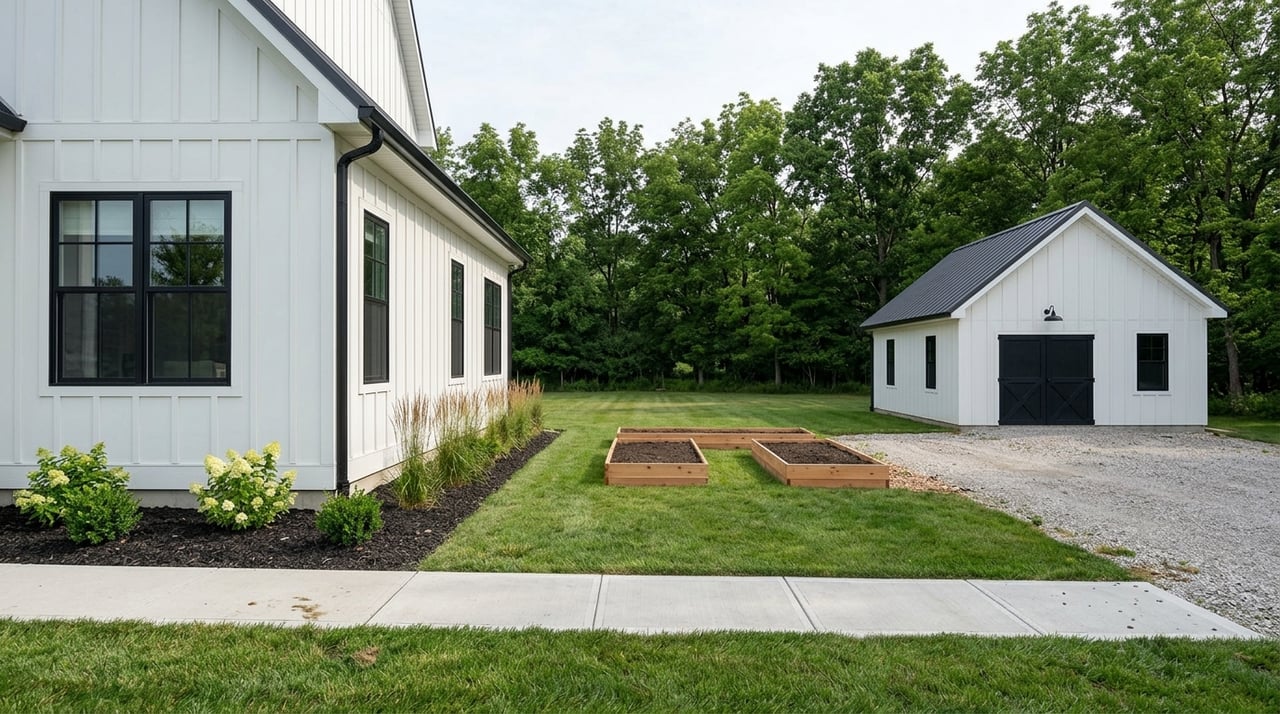
When you picture a homestead, you are probably thinking about more than a house. You may want a garden area, an outbuilding, a driveway with enough turning space, and room for future projects. That is why site planning should happen early, not after closing if you can help it.
Shiawassee County’s site plan checklist shows how detailed this process can be. Applicants are expected to show utility lines, the well, septic tank, drain field, reserve drain field, driveway, and site features such as drains, ditches, or streams.
That requirement is a helpful reality check. Before you buy, it is smart to ask not just “Can I build here?” but also “Can I fit everything I want on this site in a workable way?”
Water-related constraints can affect timing, cost, and design. The county permit packet flags floodplain review and projects within 500 feet of surface water, so nearby rivers, wetlands, and drainage features may trigger additional review.
This matters for homestead buyers because lower-cost land sometimes comes with more site challenges. If part of a parcel is wet, poorly drained, or close to surface water, your building envelope may be smaller than expected.
A parcel does not need to be unusable to require extra planning. It simply means you should understand the constraints before committing to a home layout, outbuilding placement, or driveway route.
If you are looking at property inside Laingsburg, the RO Residential/Open Space district is especially relevant. In that district, the zoning ordinance sets a 3-acre minimum lot size, 200-foot minimum lot width, 35-foot maximum height, 50-foot front setback, 20-foot side setback, 35-foot rear setback, and a 25% lot coverage limit.
Those numbers can shape your options more than buyers expect. A parcel may have enough total acreage, but setbacks and coverage rules can narrow the buildable area once you place a home and accessory structures.
Detached accessory structures also have specific limits in the city. They must be at least 10 feet from other structures and from interior side or rear lot lines, must follow the front-yard setback, cannot be placed in the front yard between the house and the road, cannot exceed the home’s first-floor area in total, and are capped at 17 feet in height for residential uses.
If your vision includes a workshop, storage building, greenhouse, or barn-style accessory structure, those details matter early. It is much easier to evaluate a parcel with these numbers in mind than to redesign later.
If the property is outside the city, county agricultural zoning may be a better match for a more traditional homestead setup. The county ordinance includes A-1 Agricultural Production, A-1½ Agricultural Production, A-2 Agricultural Production/Rural Residential, and R-1A One-Family Rural Residential districts.
The county states that agricultural zones make field crop and livestock agriculture the principal and preferred uses. The A-2 district is intended to preserve low-density rural residential growth while excluding premature subdivisions or site condominium developments that require urban services.
This can be especially important if you want a property with a stronger agricultural framework. County definitions of livestock explicitly include poultry and rabbits, which gives buyers helpful context when comparing rural parcels to more urban-style residential properties.
The county ordinance also describes rural enclaves in A-1 as a special-use option designed to preserve farmland, with clustering at one dwelling per 40 contiguous acres. While that will not apply to every buyer, it shows how strongly some county districts prioritize farmland preservation and low-density development patterns.
Homestead planning often works best when you think in phases. You may build the house first, then add a garden, then an outbuilding, then additional site improvements over time. That approach can work well, but only if the zoning and site layout allow for those future steps.
Inside Laingsburg, the RO district specifically lists private roads, home-based businesses, and nurseries or greenhouses among its special land uses. That does not mean every use is automatically approved, but it does show why buyers should ask detailed questions if they have a specific long-term vision.
This is where practical pre-purchase planning can save you time and money. A parcel that supports your first step but blocks your future plans may not be the right fit.
A homestead-style property near Laingsburg may not come with a fully urban utility setup. According to the city’s master plan, Laingsburg’s primary public utilities are sanitary sewer and storm water, while water supply is provided by private wells and treatment facilities.
In real terms, that means you may still rely on a private well and, depending on the property location, either septic or sewer. Utility assumptions should always be verified before you buy, especially if you are moving from a more suburban setting.
This also affects budgeting. Well placement, septic design, and utility coordination are not side notes. They are central pieces of the site plan.
Permitting is one of the biggest reasons land and new-construction timelines can stretch. Shiawassee County’s new-home permit packet shows how connected the approvals are.
The application expects proof of ownership, a septic permit number, well permit number, driveway permit, soil erosion review, and a site plan showing utilities, the well, septic tank, drain field, reserve drain field, driveway location, and key site features. That is a lot to line up, and each step affects the next.
If you are building from the ground up, treat septic design, well location, driveway approval, and soil and grade work as early tasks. Waiting until the house plan is fully finalized can create delays that ripple through the project.
Driveway access may seem simple, but it has its own approval process. The Shiawassee County Road Commission requires a driveway permit for a new driveway, widening, a second driveway, or a change in driveway use.
Its permit FAQ says complete applications are typically processed within seven business days. That timeline can be helpful, but it still means driveway planning should be part of your up-front due diligence.
On rural land, driveway location can influence house placement, drainage planning, and overall site costs. It is another reason to think about the parcel as a full system rather than just a home site.
If you are buying land with an existing home or older improvements, well and septic records matter. The Shiawassee County Health Department says that if there are no records for an existing well or septic system, the septic system must be exposed at the four corners and the tank pumped before permit review can move forward.
That issue comes up most often with resale properties, renovations, or additions. It can slow a closing or affect your post-closing plans if you are counting on older infrastructure without clear records.
If you are comparing vacant land to an older rural property, this is one of the key differences to keep in mind. Existing improvements are not always the shortcut they appear to be.
Before you move forward on a homestead property near Laingsburg, keep this checklist in mind:
A little more due diligence up front can save you from major redesigns later. When you are buying land, details on paper often become real costs in the field.
If you want to plan a homestead property near Laingsburg with fewer surprises, it helps to work with someone who understands both land buying and the new-construction process. Nicolette Williams can help you evaluate lots, compare site constraints, and move forward with confidence.
Stay up to date on the latest real estate trends.
Call Nicolette to start the conversation today.